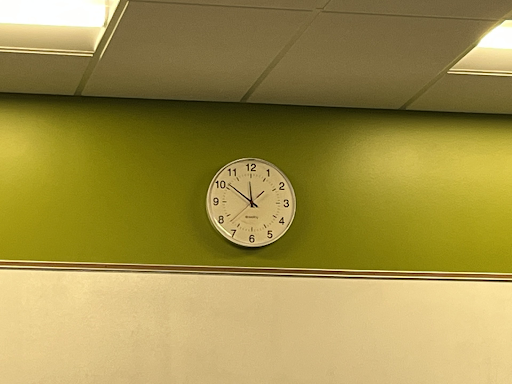
Twice a year, we go through a time change, called Daylight Saving Time. In the spring, we jump forward an hour, in the fall, we gain an extra hour. Daylight Saving Time in 2026 will start on Sunday, March 8th at 2:00 a.m. and won’t end until the 1st of November. Springtime means the time will jump forwards, so we will lose an hour of sleep.
This has been going on for over a century now, it started in Germany in 1916 and was adopted by the United States in 1918, however, the United States didn’t finalize this until 1966 with the “Uniform Time Act.” But why exactly did we start this?
Originally, Daylight Saving Time started as an energy saving measure in World War I to get the most evening sunlight and conserve coal/fuel. It was when the US first adopted this idea in 1918 that we established time zones.
Daylight Saving Time was repealed by congress after WWI, but was re-enacted once again in 1942 for a short time before it was repealed again in 1945, this trend made it also known as “War Time.” It was brought back again to stay in 1966 with the Uniform Time Act.
It is worth noting that as of 2026, 48 states participate in daylight saving time, Hawaii never adopted the idea when the Uniform Time Act was passed, and Arizona opted out of it in 1968. Some states are working to get permanent daylight saving time passed, but until a change in federal laws, they cannot get that passed in legislation.
Are there any modern benefits to daylight saving time? The short answer is no. In 2008, a Department of Energy (DOE) study showed that our energy consumption only dropped .002% due to daylight saving time, with no measurable impact on vehicle gas consumption.